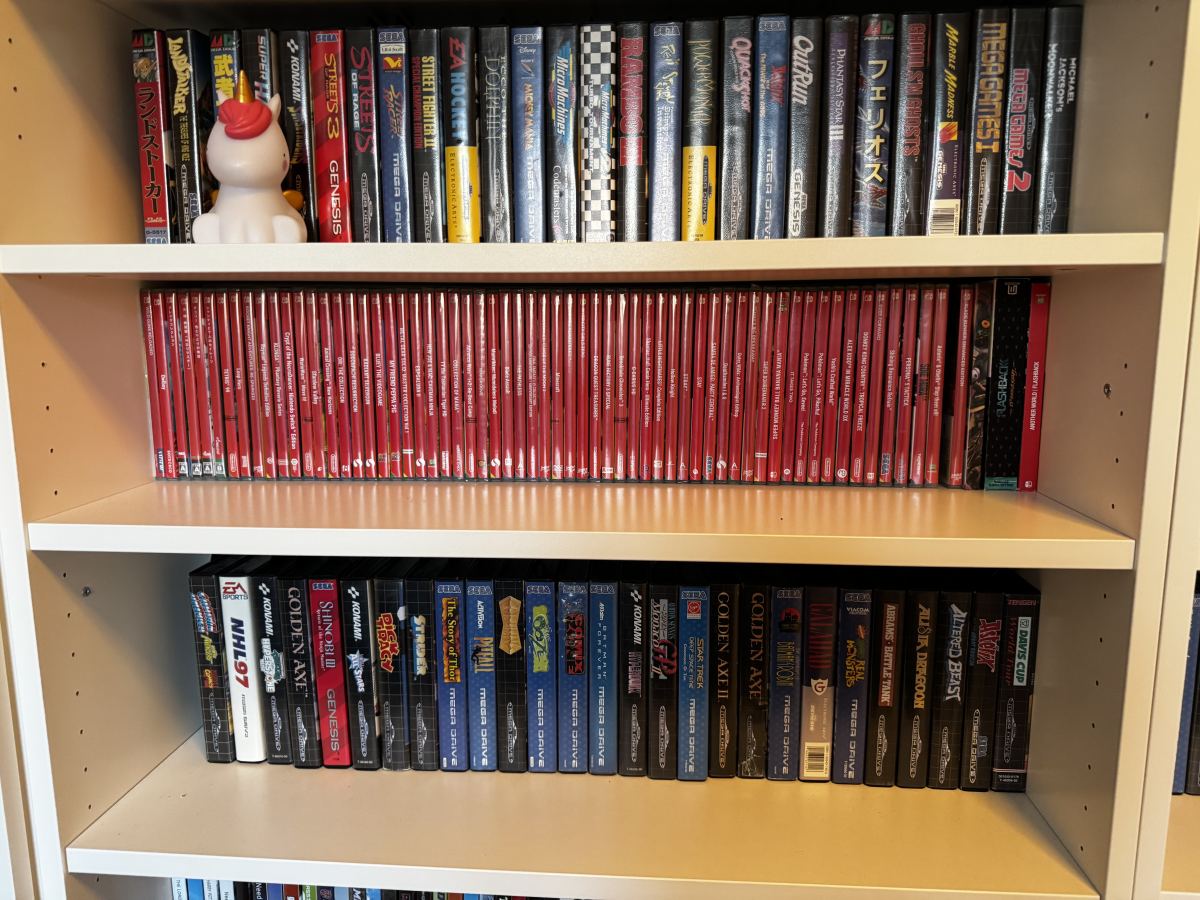
I tried spreadsheets, I tried CLZ (which is a solid app, but never quite clicked for me), I tried a few other trackers that were either too basic or secretly wanted to be a marketplace. Nothing fit the way I wanted it to -- and because I'm a software engineer who's been building things since discovering server side scripting at 16 instead of doing homework, I did what any reasonable person would do and built my own collection tracker from scratch.
About 160,000 lines of code later, here we are.
Who's behind this thing
I'm Dennis -- Belgian, living in Denmark, been into retro games my entire life. As a kid I was the type to open up Ataris and VCRs with a screwdriver just to see how they worked (and usually managed to put them back together, which my parents were surprisingly relaxed about). Sega kid through and through, still a Sega fanboy, and the crown jewel of the collection is a copy of Alien Soldier for the Mega Drive that cost more than I will ever admit to my wife -- if you know, you know.
The actual collecting is relatively recent though. I kept an eye on the retro market for years but life got in the way -- moved countries, got married, had kids -- and it took a while before I properly got back into it. Once I did it escalated in the way that collectors will immediately recognise. "I'll just pick up a couple of Mega Drive games I had as a kid" turned into hunting across six platforms and wondering where all the shelf space went.
What was bothering me
I wanted something that put cover art front and center with a dark UI that gets out of the way. Your collection should look like a collection, not a spreadsheet with thumbnails bolted on.
I also wanted proper price tracking -- but from a collector's perspective. Every tool I found treated falling prices like bad news, which makes sense if you're an investor but is completely backwards if you're someone trying to buy games. In Shelfware, green means prices are going down, because for a collector that's a good thing. There are no "sell signals" or investment jargon -- you get "Great Deal Zone" and "Prices Are High" and that's about the level of it.
And then there was the gift problem, which is really the reason this whole thing exists.
The gift problem
My wife is incredibly supportive of the hobby but if you asked her to pick out a retro game for my birthday she'd have absolutely no idea where to start. She doesn't know what I already own, she doesn't know which platforms I actually collect for, and she definitely doesn't know that the Japanese release of a game is a different product than the European one. And honestly, why would she? It's my hobby, not hers.
But she wants to surprise me, and "just buy something off the wishlist" kind of defeats the purpose of a surprise. She wanted to find something I'd love but hadn't thought of myself -- which is a genuinely hard thing to do when you don't speak the language of the hobby at all.
WIFE
So I built a feature called WIFE -- Wish Inference & Fulfillment Engine. The name is exactly as dumb as it sounds and I'm keeping it forever.
The idea is simple: I share a link with my wife, she clicks it (no account needed, no sign-up, nothing), and the system looks at my collection to figure out what I'm into -- which platforms, which genres, what series I seem to be collecting, what era of games I gravitate towards -- and then shows her a list of games I'd probably love but don't own. Each recommendation comes with a price and an explanation of why it's a good fit, written in a way that makes sense even if you've never picked up a controller in your life.
I may have gone slightly overboard on the machine learning side of things for what started as "help my wife buy me birthday presents" -- but side projects have a way of growing legs, and this one grew quite a few.
So, why?
Shelfware exists because I wanted a collection tool that works the way I think about games, and I couldn't find one. I built it for myself, the gift feature came from a real problem my wife had, and I figured if these things bothered me they probably bother other collectors too.
The name is a play on the industry term for software you buy but never use -- which, if you're a game collector, probably describes at least half your shelf. It does mine.